


HOT PRODUCT | LOW STOCK
Bayard | Standard Safety | Black Chased Ebonite | #2 Milk Glass Nib
Bayard | Standard Safety | Black Chased Ebonite | #2 Milk Glass Nib
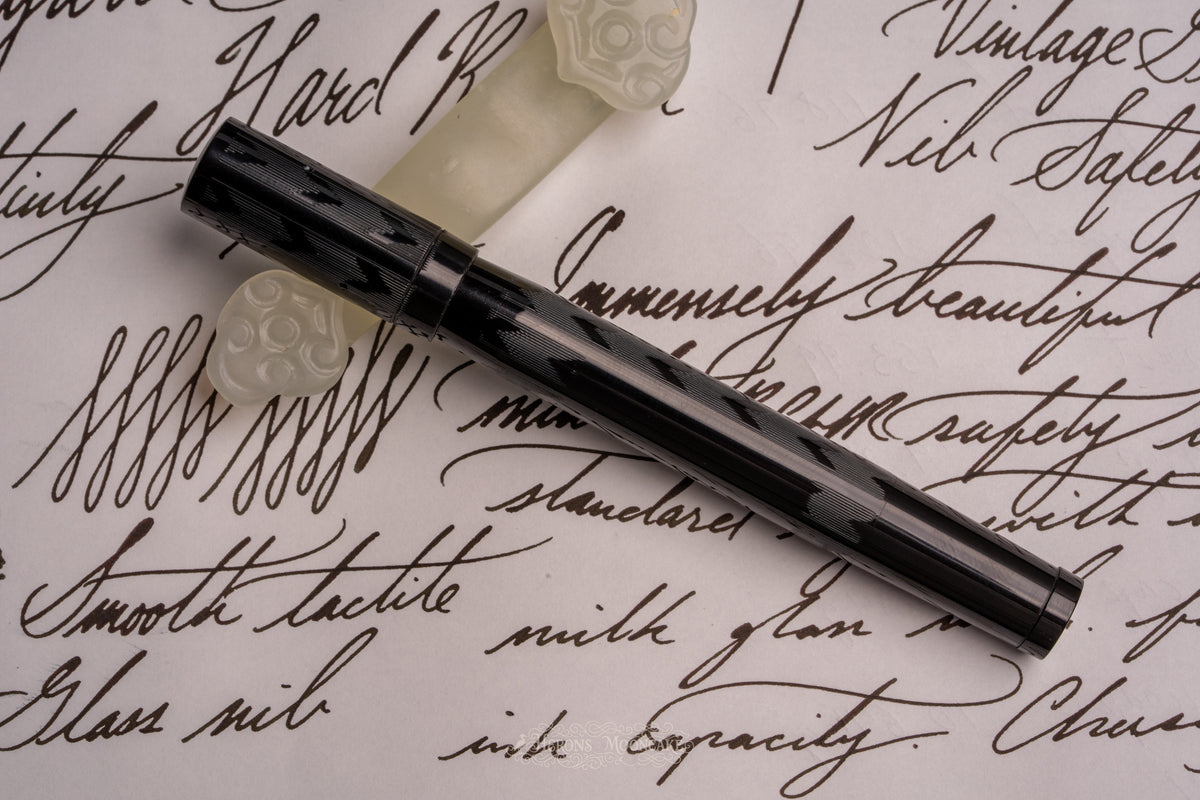
A full-size Bayard safety in chased black ebonite, unused, with a white milk glass nib and a large ink capacity.
The #2 milk glass writes a steady 0.50mm line, smooth with a tactile feel you can sense through the barrel. Pressure doesn't change it; you get the same line on the last page as the first. You fill the barrel directly with an eyedropper, the nib retracts down into the ink behind a sealed cap, and with no sac taking up space the ink capacity is fantastic.
The chasing is the same style you see across Bayard's famous models, still crisp and bright on this one. Bayard's first pens were chased and mottled hard rubber like this, safeties and eyedroppers, before lever-fillers took over the line in the late 1920s.
A2, new old stock, minty. Imprints sharp, chasing unworn. Stripped and rebuilt anyway, new cork and o-rings, fresh silicone grease, mechanism tested, and the glass nib checked at every angle.
Tested on Tomoe River 68gsm A5 white with Pelikan 4001 Brilliant Black.

Technical Specifications

Technical Specifications
Brand: Bayard
Model: Bayard 20
Production Year: 1930
Material: Black Ebonite
Trim Color:
Nib Size: 2
Nib Material: Glass
Nib Grind: FM
Nib Flexibility: g
Line Variation: - (0.0x)
Pen Length: 118.96
Pen Grip Section:
Restorer: Heron's Mooncake
Restoration Grade: A
Couldn't load pickup availability
Bayard | Standard Safety | Black Chased Ebonite | #2 Milk Glass Nib
Get it between - and -.


Appendix for Listing Details
Sweating the details is fundamental to understanding, appreciating, and knowing the peice of history you have in your hands.
All pens are filled and tested, not just dipped in ink.
Abbreviated Filling Instructions

Line Variation Standard
Different restorers have different standards for line sizing and especially for vintage pens, the printed tipping size will not always be accurate due to repairs/grinds/etc. Please use this as a frame of reference for consistency.

Flexibility Standard
Nib flexibility is such a controversial topic, but there needs to be some level of consistency so please take this table as a frame of reference for my restorations and as someone who is writing in a calligraphic/spencerian style of cursive script. Without objective measurements, flexibility terms such as wet noodle are useless as someone with stronger forearms and grip strength will make even manifold nibs into a wet noodle.

Restoration Ratings
These are guidelines incorporated from various online sources not limited to Reddit, David Nishimura, etc.
