


HOT PRODUCT | LOW STOCK
French Chased Aluminum Button-Filler, NPT, Glass Nib
French Chased Aluminum Button-Filler, NPT, Glass Nib
Aluminum body, glass nib, unbranded French production. Three markers that cluster firmly in the wartime substitution era. France entered the Second World War with a fountain pen industry built on celluloid, gold, brass, and rolled-gold trim. By 1940 those material lines started closing. Gold was redirected to currency reserves, brass to munitions, and several smaller French ateliers shifted to materials outside the regulated chain for both nib and body. Glass nibs appear on this kind of production across Continental Europe through the war: Goldfink, Columbus, Burnham, and a long tail of unbranded German, Italian, and French makers all used them as ersatz tipping when gold became unobtainable. Aluminum followed the same logic for bodies, in the same year (1941) S.T. Dupont turned to aluminum for its first lighter when brass became strategic.
The body here is solid aluminum, not an overlay over hard rubber. Chased waves run the length of the barrel and cap, the kind of decorative work that gives an otherwise functional wartime pen some visual life. The aluminum gives the pen real weight in the hand: 26.3g capped, with a girthy 8.78mm grip and 118.83mm capped length. Substantial without crossing into heavy, in the register of a metal-overlay Waterman rather than a celluloid lever-filler. Nickel-plated trim throughout, button-filler mechanism. The maker is unsigned. Unbranded French production was common under the Occupation, with smaller workshops continuing to assemble pens from available materials without registered names on the barrel.
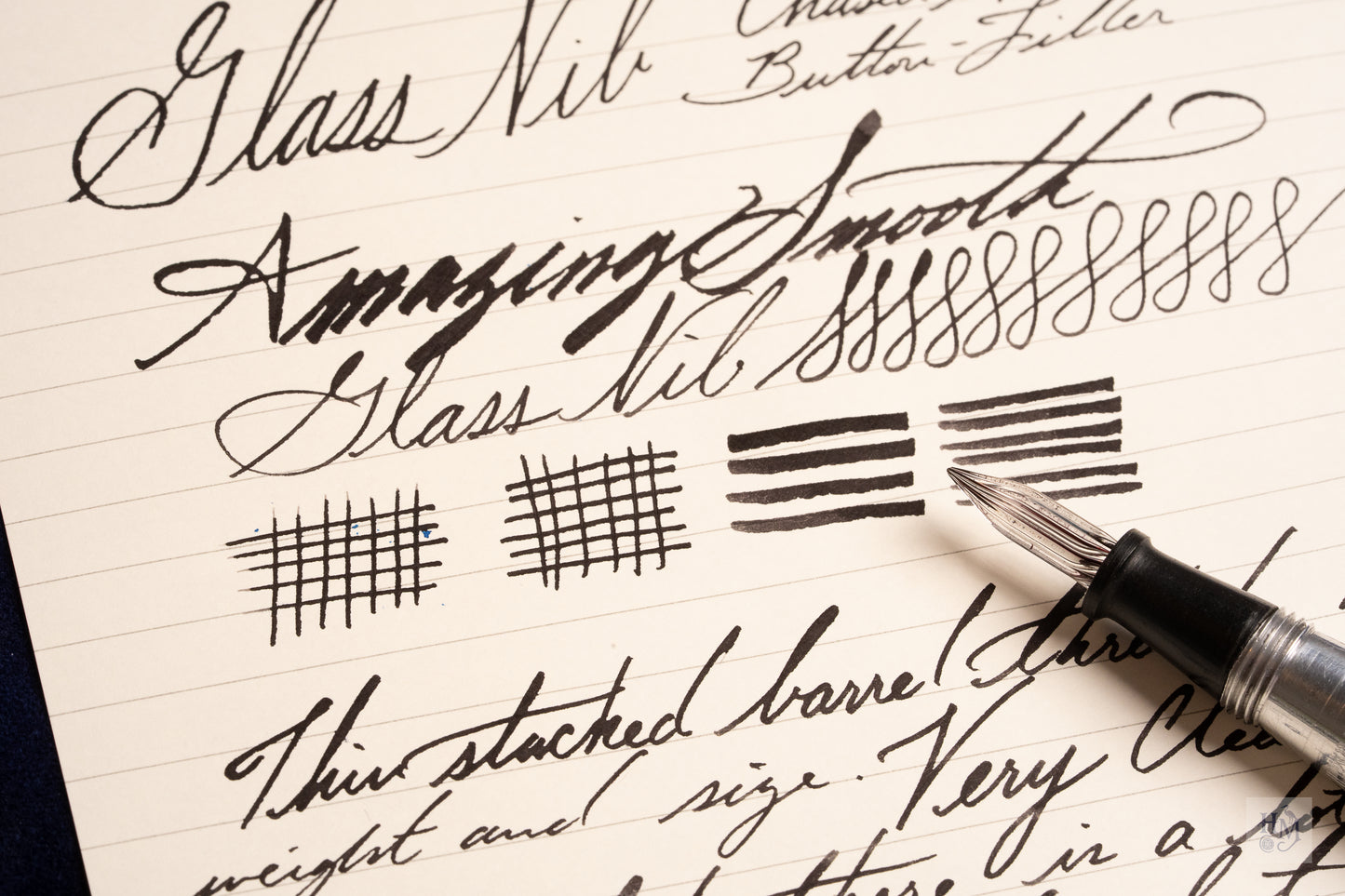
The clear glass nib lays a controlled 0.40mm line, single width with no variation under pressure. Glass nibs work by capillary feed along spiral grooves cut into the tipping, with ink running down those grooves to the page rather than between flexed tines. The result is a smooth, rigid writer with manifold character: a precise, dry-leaning line that holds across long writing sessions without skip or hard start.
Grade B-. The aluminum carries microscratches from a previous life of carry, intentionally left in place. Polishing the surface flat would remove the patina that gives the pen its honest vintage character and risk losing detail in the chased waves, glass nib inspected for crack-free condition and seated cleanly in the section. Fitted with a latex sac, but can swap to a silicone sac if you want to use more diverse and troublesome inks (remember silicone sacs will creep ink so keep pen upright in storage).
Tested on Rhodia 90gsm ivory with Pelikan 4001 Brilliant Black.

Technical Specifications

Technical Specifications
Brand: French
Model:
Production Year: 1940
Material: Silver Aluminum
Trim Color: Silver
Nib Size: 3
Nib Material: Glass
Nib Grind: F
Nib Flexibility: g
Line Variation: - (x)
Pen Length: 118.83
Pen Grip Section:
Restorer: Heron's Mooncake
Restoration Grade: B-
Couldn't load pickup availability
French Chased Aluminum Button-Filler, NPT, Glass Nib
Get it between - and -.


Appendix for Listing Details
Sweating the details is fundamental to understanding, appreciating, and knowing the peice of history you have in your hands.
All pens are filled and tested, not just dipped in ink.
Abbreviated Filling Instructions

Line Variation Standard
Different restorers have different standards for line sizing and especially for vintage pens, the printed tipping size will not always be accurate due to repairs/grinds/etc. Please use this as a frame of reference for consistency.

Flexibility Standard
Nib flexibility is such a controversial topic, but there needs to be some level of consistency so please take this table as a frame of reference for my restorations and as someone who is writing in a calligraphic/spencerian style of cursive script. Without objective measurements, flexibility terms such as wet noodle are useless as someone with stronger forearms and grip strength will make even manifold nibs into a wet noodle.

Restoration Ratings
These are guidelines incorporated from various online sources not limited to Reddit, David Nishimura, etc.
