


HOT PRODUCT | LOW STOCK
Gold Starry 254 Safety, Black Ebonite, Amber Glass Nib
Gold Starry 254 Safety, Black Ebonite, Amber Glass Nib
HM1225065
A genuinely unusual piece. Gold Starry began in 1909 as the French distribution arm of Conway Stewart under the "Gold Star" name, switched to "Gold Starry" after a 1912 trademark dispute, and became a fully independent French manufacturer by 1921. Their early safeties were among the first pens they produced — honest black ebonite construction with the star trademark engraved on the barrel.
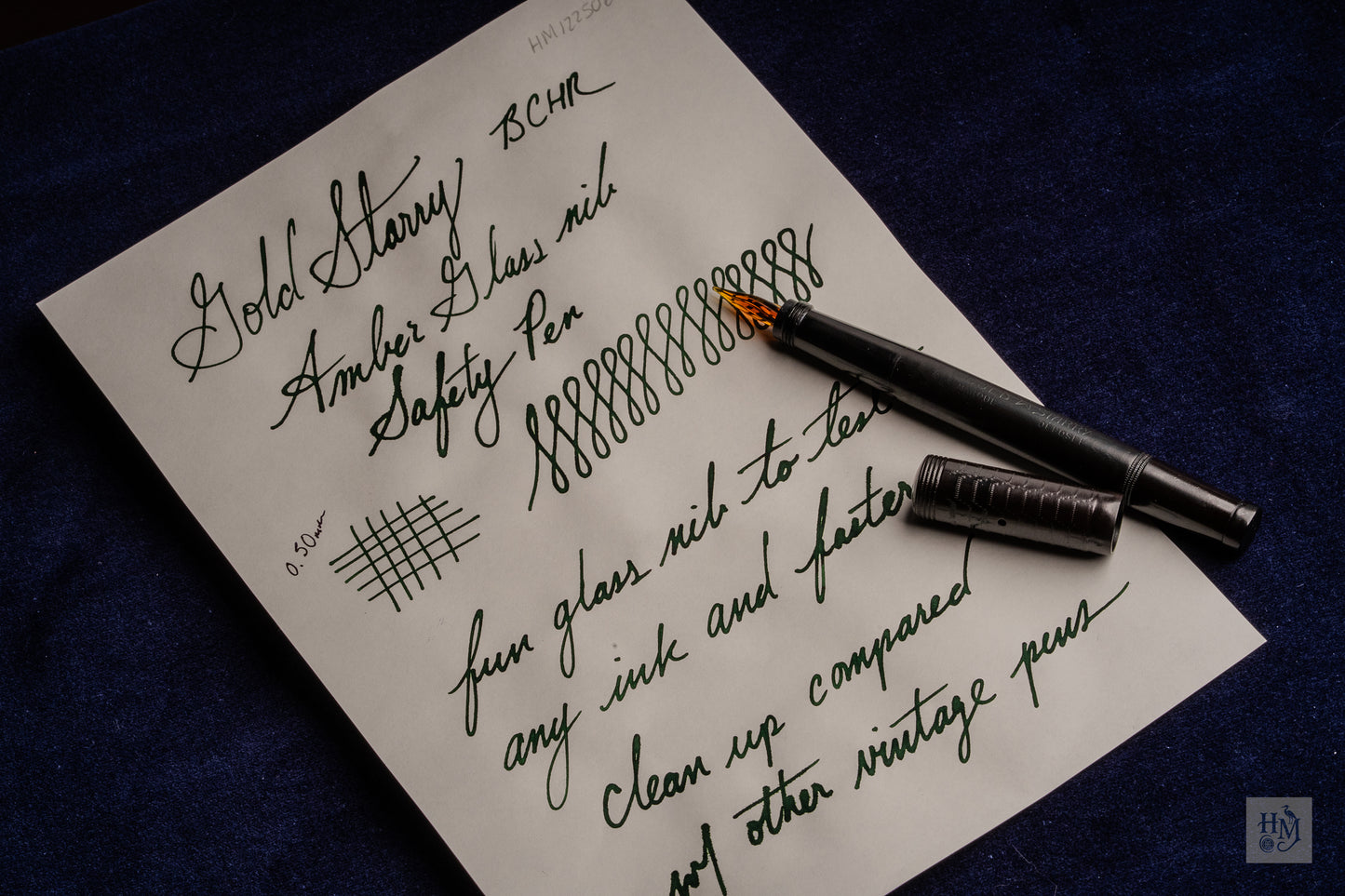
The amber glass nib is the draw here. Glass nibs on vintage pens are rare enough that most collectors have never seen one in person. Rigid, completely corrosion-proof, and multiple angles to use the glass tip. No flex — just a consistent FM line on the tip, with lower angles letting you paint the page. The real advantage is practical: glass is the easiest nib material to clean. Flush, wipe, and you're writing with a new ink in seconds. If you like testing inks constantly and switching colors fast, this is the pen for that — cleanup is dramatically faster than any ebonite feed vintage pen.
Black ebonite with worn chasing — grade C+. Full safety mechanism rebuilt with fresh gaskets. Ebonite rejuvenated and hand-polished.
Tested on Tomoe River 52gsm (new) with Diamine Sherwood Green.

Technical Specifications

Technical Specifications
Brand: Gold Starry
Model: 254
Production Year: 1930
Material: Black Ebonite
Trim Color:
Nib Size: 2
Nib Material: Glass
Nib Grind: FM
Nib Flexibility: g
Line Variation: - (x)
Pen Length: 116.56
Pen Grip Section:
Restorer: Heron's Mooncake
Restoration Grade: C+
Couldn't load pickup availability
Gold Starry 254 Safety, Black Ebonite, Amber Glass Nib
Get it between - and -.


Appendix for Listing Details
Sweating the details is fundamental to understanding, appreciating, and knowing the peice of history you have in your hands.
All pens are filled and tested, not just dipped in ink, which does not reflect writing characteristics whatsoever.

Line Variation Standard
Different restorers have different standards for line sizing and especially for vintage pens, the printed tipping size will not always be accurate due to repairs/grinds/etc. Please use this as a frame of reference for consistency.

Flexibility Standard
Nib flexibility is such a controversial topic, but there needs to be some level of consistency so please take this table as a frame of reference for my restorations and as someone who is writing in a calligraphic/spencerian style of cursive script. Without objective measurements, flexibility terms such as wet noodle are useless as someone with stronger forearms and grip strength will make even manifold nibs into a wet noodle.

Restoration Ratings
These are guidelines incorporated from various online sources not limited to Reddit, David Nishimura, etc.
