


HOT PRODUCT | LOW STOCK
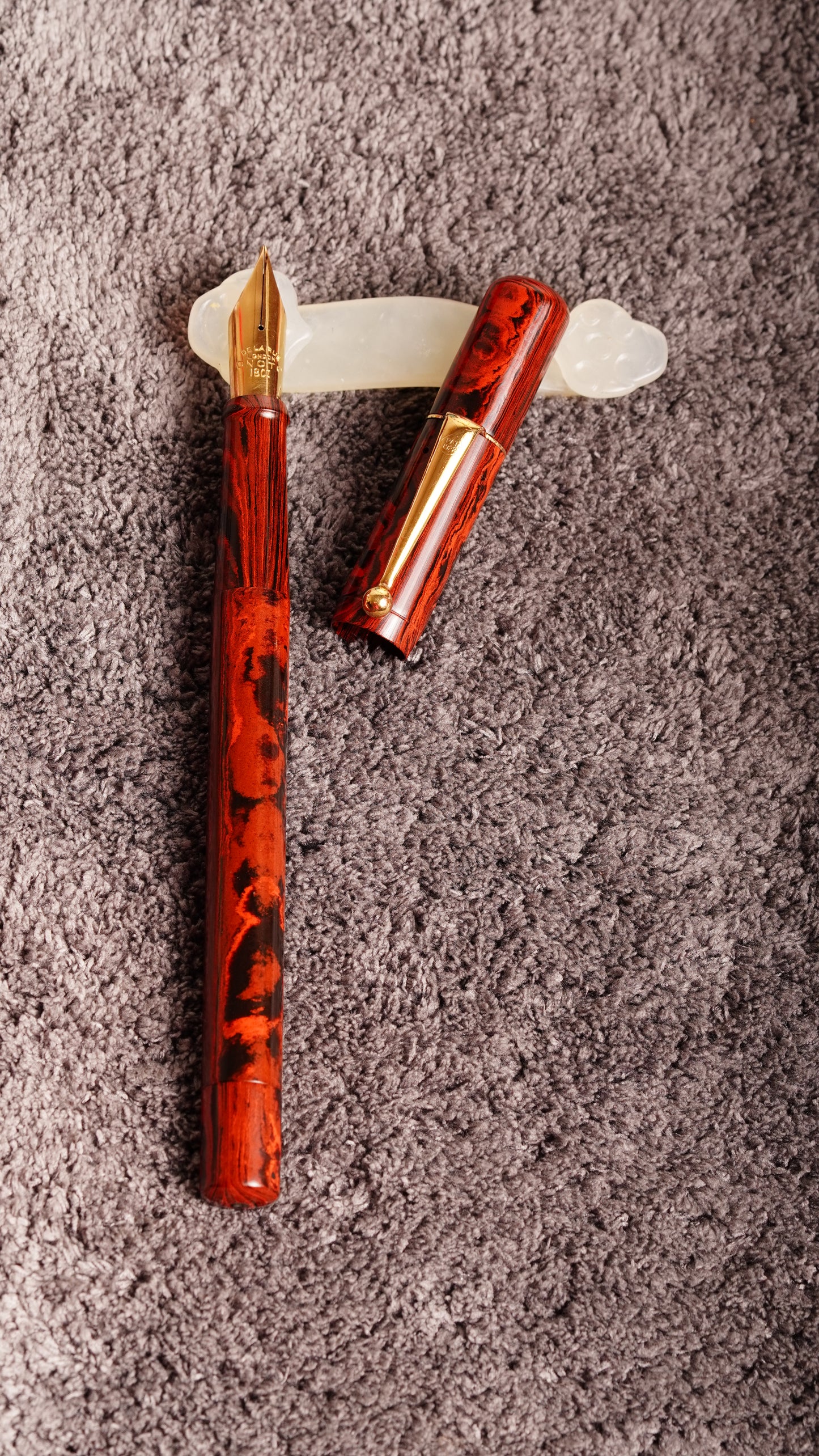
Onoto Mammoth 1800, Mottled Ebonite GPT, #8 18ct Soft Manifold Nib
Onoto Mammoth 1800, Mottled Ebonite GPT, #8 18ct Soft Manifold Nib
📒 History/Provenance
The Onoto Mammoth 1800 (c. 1924) is a strong example of the innovation and craftsmanship that defined Onoto, one of Britain’s great fountain pen makers. Founded in 1905 by Thomas De La Rue & Company (D.L.R., was a completely made up name meant to boost sales), Onoto became famous for George Sweetser’s plunger-filling mechanism, which used a vacuum on the downstroke to draw ink into the barrel. This was a major improvement over the eyedropper pens of the period and remained a hallmark of the brand for decades. Onoto pens have secured a lasting place in fountain pen history, even after production ended in 1958.
🧪 QA & Recommendation
Buttery smooth #8 nib with softness, immensely enjoyable writing experience gliding across the page. Very juicy feed that can be adjusted given the ink shut-off valve, can close for drier writing experience.
Tested on Clairefontaine 90gsm A5 Pad, inked with Pelikan 4001 Brilliant Black.
🔧 Restoration Commentary
Imprints are worn but legible, with slight wear to gold plated trim.
Mottled ebonite rejuvenated and hand polished, "softness" of ebonite restored. Very beautiful mottled ebonite rejuvenated to an incredible condition on color and shine.
Pen fully disassembled and cleaned throughly, with gaskets replaced.
Nib heat set and tuned for smoothness.

Technical Specifications

Technical Specifications
Brand: De La Rue
Model: Onoto Mammoth 1800
Production Year: 1924
Material: Mottled Red Ebonite
Trim Color: Gold
Nib Size: 8
Nib Material: 18k gold
Nib Grind: FM
Nib Flexibility: g
Line Variation: - (0.0x)
Pen Length: 158.69
Pen Grip Section:
Restorer: Heron's Mooncake
Restoration Grade: B+
Couldn't load pickup availability
Onoto Mammoth 1800, Mottled Ebonite GPT, #8 18ct Soft Manifold Nib
Get it between - and -.


Appendix for Listing Details
Sweating the details is fundamental to understanding, appreciating, and knowing the peice of history you have in your hands.
All pens are filled and tested, not just dipped in ink, which does not reflect writing characteristics whatsoever.

Line Variation Standard
Different restorers have different standards for line sizing and especially for vintage pens, the printed tipping size will not always be accurate due to repairs/grinds/etc. Please use this as a frame of reference for consistency.

Flexibility Standard
Nib flexibility is such a controversial topic, but there needs to be some level of consistency so please take this table as a frame of reference for my restorations and as someone who is writing in a calligraphic/spencerian style of cursive script. Without objective measurements, flexibility terms such as wet noodle are useless as someone with stronger forearms and grip strength will make even manifold nibs into a wet noodle.

Restoration Ratings
These are guidelines incorporated from various online sources not limited to Reddit, David Nishimura, etc.
