


HOT PRODUCT | LOW STOCK
Waterman's | 32 Glass Cartridge | Black Celluloid | #2 Flex
Waterman's | 32 Glass Cartridge | Black Celluloid | #2 Flex
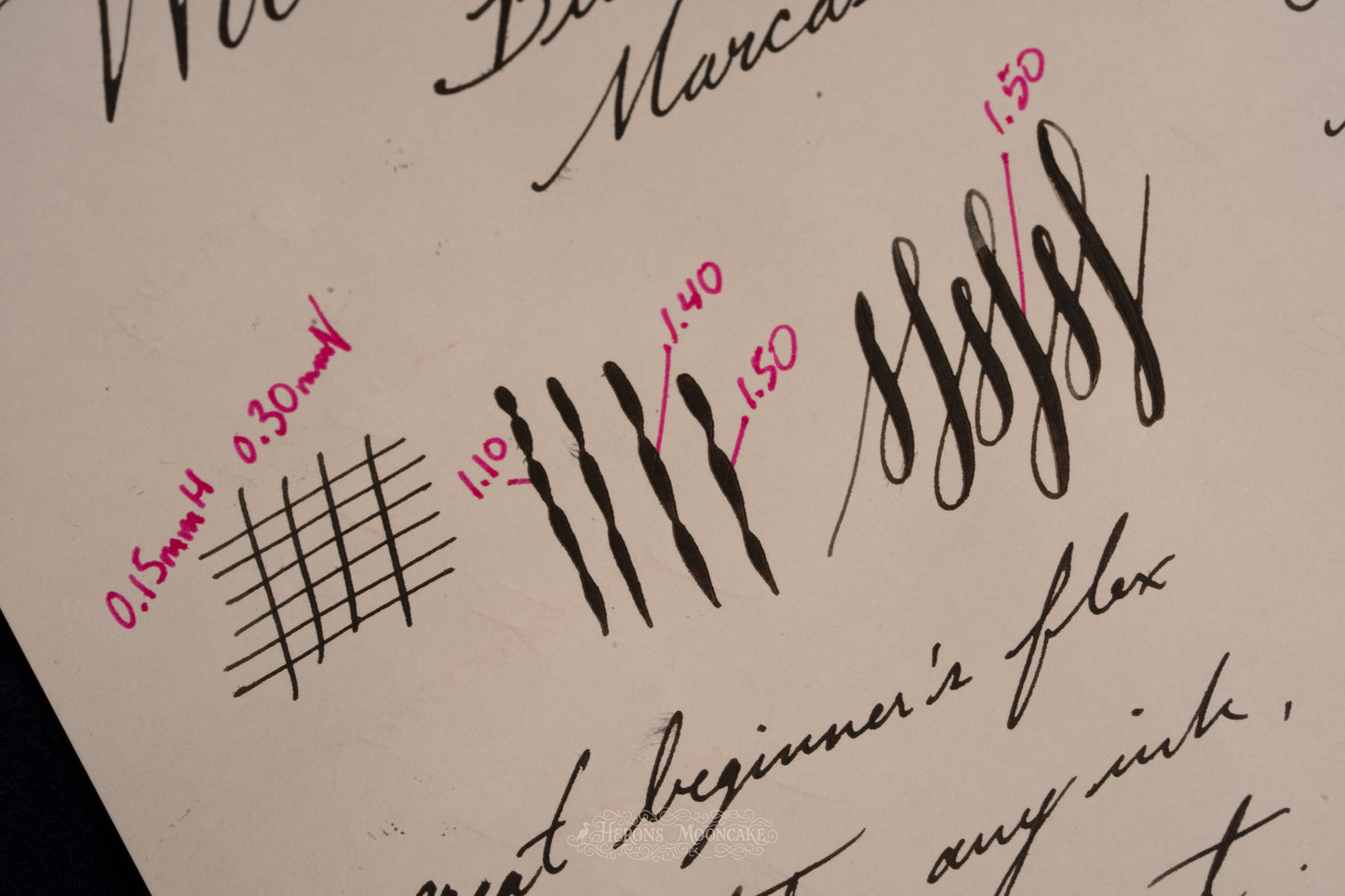
If you're learning flex stubs, this is the pen I'd start you on. Unflexed it writes an EEF hairline on the crossstroke, and deliberate pressure opens it to a true 4B, a 10x spread out of a #2 nib. It takes firm pressure before the tines spread, so ordinary handwriting stays consistent and the big swells only come when you press for them.
Filling is by glass cartridge. There's no sac and no lever to service; you top the cartridge up from any ink bottle with a pipette, and the whole assembly rinses clean fast. Any ink goes, including the shimmers and iron galls I keep away from sac fillers, and the webbed celluloid ink window shows how much ink is left at a glance.
Jif-Waterman, the French arm, introduced glass-cartridge pens in 1936, and David Nishimura dates the modern cartridge era to that program. The first runs were converted American production, which is why this barrel reads Made in USA; shorter pens were built on the 32, longer ones on the 92. The 32 code is simple, 3 for Waterman's 1929 economy celluloid series and 2 for the nib size. The clip is set with marcasite, small faceted pyrite stones, the same jewelry material common on 1920s and 30s brooches.
Tested on Tomoe River 68gsm White with Pelikan 4001 Brilliant Black.

Technical Specifications

Technical Specifications
Brand: Waterman's
Model: 32 Glass Cartridge
Production Year: 1936
Material: Black Celluloid Nitrate
Trim Color: Silver
Nib Size: 2
Nib Material: 14k gold
Nib Grind: F
Nib Flexibility: g
Line Variation: - (10.0x)
Pen Length: 110.56
Pen Grip Section:
Restorer: Heron's Mooncake
Restoration Grade: C
Couldn't load pickup availability
Waterman's | 32 Glass Cartridge | Black Celluloid | #2 Flex
Get it between - and -.


Appendix for Listing Details
Sweating the details is fundamental to understanding, appreciating, and knowing the peice of history you have in your hands.
All pens are filled and tested, not just dipped in ink.
Abbreviated Filling Instructions

Line Variation Standard
Different restorers have different standards for line sizing and especially for vintage pens, the printed tipping size will not always be accurate due to repairs/grinds/etc. Please use this as a frame of reference for consistency.

Flexibility Standard
Nib flexibility is such a controversial topic, but there needs to be some level of consistency so please take this table as a frame of reference for my restorations and as someone who is writing in a calligraphic/spencerian style of cursive script. Without objective measurements, flexibility terms such as wet noodle are useless as someone with stronger forearms and grip strength will make even manifold nibs into a wet noodle.

Restoration Ratings
These are guidelines incorporated from various online sources not limited to Reddit, David Nishimura, etc.
